Friday Night Opinion: Chattanooga Councilwoman Entitled on Traffic Stop

Last week we had Varnell, Georgia, and earlier this week, FNO examines the actions of a councilwoman in Chattanooga, a mere 28 miles northwest of Varnell.

Her name is Demetrus Coonrod, and this isn’t her first time gaining negative attention she claims to be racist, and has been arrested for among other things, child abuse.

Recently, the Chattanooga Times Free Press posted this video of Coonrod acting belligerent with a female officer from Chattanooga Police Department, for issuing traffic citations to the male driver of the vehicle, apparently owned by the councilwoman.

She calls either the Police Chief or an Assistant Chief of CPD after the traffic stop had concluded.  She requires the officer to standby, and wants a Sergeant present, and it’s clear she wants to protest the citations issued, which were well within the bounds of the law.

I’ll be quick on this one, because there’s enough source material here for you to draw your own conclusion.

But I have to ask you, is this truly the kind of council person you want representing you?  A person who wants special treatment because of their position, including avoiding responsibility for their traffic law infractions.

You may not be aware, but this type of behavior, left unchecked, is exactly how a person starts down a road where they embezzle funds, use their position to award contracts and jobs to family and friends, and all other unethical behavior in office you can think of.

Don’t believe me?  Well, I’ll point you to an acquaintance of mine from years ago, Paul Winfield.

Paul and I met at the Main Streets Conference held in Oklahoma City in 2010.  He’s a great person, or so I thought.  If you read that article in the link, you’ll get a rundown of what he did in office.  The sad thing is, I met him around the beginning of his term as Mayor of Vicksburg, and it can be said he was at the conference trying to find answers to revitalizing a city in Mississippi that all of us should be proud of.  It’s one home of the Blues.

Unfortunately, as you fast forward through his career, you find that Paul found it easier to take shortcuts, and by the end of it all he wound up in federal prison, losing his wife, his life, his name, and mired the city offices of Vicksburg into turmoil.

He also was stripped of his bar certification, which I know was hard to obtain, and not something he could have cheated at.  All that hard work, just to implode in the face of typical challenges.

Unfortunately, it is this type of character flaw that can be hard to find before it shows itself.

However, in the case of Ms. Coonrod, it’s already shown itself.  A serial-armed robber, a child abuser, a self-proclaimed racist, someone who can’t follow the simple rules of early release she was awarded for her testimony against corrupt corrections officers.

She showed us all a long time ago who she was and what she was about.  Apparently the citizens in Chattanooga are forgiving souls, and they gave her a chance.

But this is less than three months into her first term, and it’s only going to get worse from here.  If they let her stay in office, it will support her behavior, and she will become even more brazen.  Because that’s her personality, and that’s all she’ll ever be.

I hope for Chattanooga’s sake, a town I hold dearly, if for nothing else, that they are home to my favorite barbecue restaurant, Sugar’s Ribs, that they are less forgiving this time around, and remove Ms. Coonrod from office.

If you want to get involved, please write an email to Mayor Andy Berke, and let him know why Ms. Coonrod should not be in office.

Walk with Warriors – Advance Orders

I’ve mentioned briefly, in several places on the internet that Walk with Warriors is coming out soon, and that I’m taking advance orders.

For those that don’t know, advance orders are those that come directly to me, I then personally sign a copy (or copies) to you, and ship them to you.

The book contains one short story from me, about an experience I had while serving in the Army, that defined me.  And, the book features stories from 21 other veterans, just like me, talking about a piece of their experience.

Buying a copy from me directly now means that I will receive it prior to the publishing date, and I personalize and sign the book, to whatever your request may be.

The cost is $13.99, and I ship directly to you, so you won’t have to worry about monitoring your mail, I ship and contact you as soon as yours goes out.

If you’re interested, please use the contact form on this site.

The book will be available on Amazon in September (2017), I don’t have the exact launch date at this time, that part is out of my hands.

I thank all that supported this project that I’m part of, and am forever grateful for those that have stepped up and been better to me than I probably deserve.

-Matthew

Review: Frontline’s ‘Chasing Heroin’

Last February, Frontline put out an investigative journalism film called ‘Chasing Heroin’ and the story focuses on Seattle, Washington and the various government agencies involved in trying to mitigate heroin use through the use of a drug court, and alternative sentencing.

They also try to bring some sense to how the US opioid epidemic came about.  Mostly, they blame two things:

1.  That doctors in the US were not treating pain symptoms appropriately, as in not at all.

2.  That Purdue Pharma was using junk science to pass OxyContin as a ‘wonder drug’ in lieu of the Hospice-Home Care era that arose in the middle 00’s.  As they entered that market, which at the time primarily had end-stage cancer patients, they used the successes to expand their market into all patient markets, with a major focus on primary care physicians.

If you follow federal court, you know that Purdue ultimately admitted to a bad marketing, aggressive sales tactics, and too much junk science to acknowledge.  They’ve paid dearly, and continue to be listed as respondents in lawsuits; I could argue that the penalties are not enough, but that’s for another time.

As the story unfolds, there is an emphasis on the idea of alternative treatments.

Early on, they focus on Bremerton, a small town across the Puget Sound from Seattle, that was an early hot spot for the Mexican cartel-influenced heroin trade that came in the wake of pain pill prescriptions being halted.  The Mayor, Patty Lent attempted to bring a methadone clinic to the town, because almost overnight they were deluged in heroin, and it’s after affects.

But many citizens didn’t want it.  They were aware of the methadone clinic in Seattle, and the type of neighborhood it had become, only after the clinic opened.  The Seattle Times has covered that topic several times since the clinic opened, and they’ve claimed that Seattle Police do not actively response to the area for petty crime, because the calls come in so frequently, they don’t have the manpower to address each and every call.  That idea has also been proven inaccurate, but it seems to show that media does as much to counter methadone clinics, as they seem to do in support of them.

At any rate, the citizens overwhelmingly showed no support for the Mayor’s initiative to bring a clinic to town, and that was that.  Frontline’s piece attributes 40 overdoses have occurred in Kitsap County since the measure was shot down.  They frame it an arrogant attempt and holding citizens responsible.

In the next segment, they play a short montage, with audio overlays of television news segments where the lead is that half of inmates in federal prison are in for non-violent drug offenses.  The problem with this statement is that non-violent drug offenses is used to describe any person who is charged under the Narcotics Act, who also does not have a violent crime attached.  I’ll discuss why that context is important later.

And from that montage, they go right into a quick analysis of Seattle’s drug court.  They talk about the basis of the court is that drug addicts sign their rights away to a trial, and that they admit to being guilty of the charges presented to the judge, meaning that they can be sentenced immediately.  However, that stick is used to get them to choose the “carrot” of treatment, and other alternative sentencing, like anger management, victim encounters, and so forth.  It’s in this segment that we get our first taste of what drug court really is.  Cari Cresia is followed from the introductory segment throughout the film, and she returns in this segment, facing a small prison sentence of one or two years for the crimes she’s been charged with.  In her discussion with Frontline’s film crew after the appearance, she mentions briefly that the charges involve her dealing narcotics.

I didn’t introduce you to Cresia in the start of this review, because I wanted to make the point:  This concept, of drug addicts in Seattle’s drug court graduating from drug use to drug dealing is happening with far too frequency.  And in this film, you’re going to see it again.

Cresia admits on camera that she started small, and then ultimately was selling in large quantities, and implicates herself that she was involved with a drug cartel, and then tries to soften the information by saying her involvement was indirect, removed by one person……sounds interesting.

Then in comes Michael Botticelli, who at the time of the film was the Director of the Office of National Drug Control Policy.  He admits to having been in a DUI accident in 1988.  A judge offered him treatment, or jail time.  He took treatment, and has been a lightning rod for alternative sentencing and treatment of addiction-based crimes ever since.  One point to make here is that Botticelli, despite all his credentials, and his sincerity about his efforts on this front, he never mentions what happened in that accident back in 1988.  If it was his first offense, why was a judge so privy to offering him treatment as a way to remedy the sentence?  While by today’s standard the situation makes sense, that wasn’t really the case in the 80’s.  Alternative sentencing really didn’t take hold anywhere until the late 90’s, and even then it was rare.  I’m sure there’s not nefarious to the story, but it does seem curious that he would lend this story out as his credibility for being in the room, but only tell part of it.

Next we here from the King on Nonsense, Eric Holder, who talks about his time as a judge in Washington D.C., where he was forced to issue mandatory minimum sentences to people who were dealing drugs “in a non-violent way.”  Which is funny to hear.  Holder served as a judge in the late 80’s and early 90’s in the District.  This also coincides with record homicide rates, directly attributed to the drug “trade,” as in dealers.  So in this section, nonsense fully prevails.

The parts where they juxtapose court hearings into the film, show that the attempt here is for people, prosecutors, judges, counselors, and so on, who have no direct relationship with the offenders, and all collectively try to force them into treatment, programs, and slew of other alternative sentencing structures, that are suppose to set these offenders up for success.

But what it seems like is just another meat grinder, trying to push people fast, fast, fast, and hoping for the best.  And the long these drug courts operate, the longer they can substantiate themselves with statistics, studies, results, and all the social science one comes to expect as being legitimate for any cause.

“Gaylan” was featured in the tail end of this segment, and he’s a ‘failure’ in the eyes of drug court.  He’s down to his last ‘point’ as they refer to it, before he’s automatically sentenced between 60 to 120 months for the crimes he’s committed over his time in drug court.  He doesn’t receive the early release that he desires, and as soon as he completes the program he’s assigned to, goes right back out to shoot heroin.  He even flashes what he says is 350 dollars worth of heroin, as he and another male setup their syringes and shoot heroin on an outdoor staircase, while Frontline is filming.  I wonder where he got the money from.

Next, we’re exposed to Seattle’s LEAD program, short for Law Enforcement Assisted Diversion.  And the explanation given by Lieutenant Mills from Washington State Department of Corrections doesn’t make sense.  At first she says they defer drug addicts to the program.  Then she’s asked if they defer everyone, and she say’s no.  Then when she’s asked to explain, she bluntly points out that the program is about counseling, and again, alternative sentencing measures.

Except for the fact that we’re not even talking about a judge at this point.  So is she saying that police are empowered to make a “judgment” about a person and what they can handle for treatment?

They bring in an unidentified male from the street with loads of needles and paraphernalia, and judging from his disposition, is very high.  They present him in front of a counselor, and she starts reeling of treatment options.

Mikel Kowalcyk is the counselor, and we get to hear a lot from her in this segment, and she does a great job of explaining what LEAD…..it’s an attempt not to stop drug use, but to stop all the other crime that drug addicts commit, like theft, trespassing, and safety issues like overdosing.  What this begins to sound like is a very calculated plan to appear like a helpful approach to helping addicts, when it is in fact a way to stop businesses and non-addict residents from having to confront drug addicts on a daily basis in one form or another, keep those productive people from leaving the city, and keep property values up.  Obviously there’s someone up above who knows how to feed the line personnel a lot of nonsense, while still achieving a goal of being a land of liberal thought, and concealing the real problems of the community at large.

Then we get a peak into a LEAD meeting, which are conveyed twice a month, involving all the members of the team that are charged with mitigating these offenders.  One of the members, a case manager, speaks in the meetings in a way that suggests that she believes she knows everything better than virtually everyone else in the room, including law enforcement officers.  And judging from the reactions, she’s someone special, because it’s clear this is par for the course.

That case manager then sits down with Kristina Block, another heroin addict, for her initial intake.  And the spiel she gives the offender only furthers the point of this program, when she says they’re looking to increase her “quality of life.”  And we’ll talk about that more in awhile.

As her intake session hums along, it’s both tragic and alarming.  For one, she’s already admitting to “sometimes” dealing.  But then she talks about all the other crime she involved in, shoplifting, “boosting,” which is an organized form of shoplifting that involves multiple people raiding a particular item from several locations, and selling them to a “fence” for a predetermined amount.  All in all, she is bringing in $1,000 dollars a week from these efforts, in her words.  But then all of it is going to “dope.”

And in comes Lisa Daugaard, from the King County Public Defender’s Office.  In the 80’s and 90’s, when crack hit Seattle heavy, like every other community that faced the drug, police departments employed undercover, and stake out units to strike open air drug markets.  Unfortunately, for SPD, Daugaard saw an opportunity to accuse them of racial bias in their arrests, by staging statistics that suggested they were four times more likely to arrest black drug offenders, than white.  The problem is that this accusation doesn’t look at the specific issue Seattle was facing.  First, the crack epidemic in Seattle specifically affected black populations.  The few people who were not black that were affected by it, were literally so few and far between, that the areas known for the drug, would not be places they would frequent on extended stays.  Consequently, the people spending the most time there were drug dealers, and addicts with nowhere else to go, and this is how the city block known as “The Blade” came about years ago, which is also featured in Frontline’s piece.

Daugaard sued SPD, who ended up settling, but the settlement was to create an alternative program for drug offenders.  Honestly, SPD should have fought Daugaard.

And with her arrival, she explains, along with Dan Satterberg from the Prosecutor’s Office, how this program was formed, what it took to be deployed, and then they talk about their being spotlighted by the Obama Administration as a model program.

And here comes the faux-statistics to make the program seem legitimate.  They had the University of Washington track the program, and it shows that participants are 58% less likely to be arrested.  Which sounds wildly successful.

Except, you have to factor in the fact that every person in the program is getting “arrested” on daily basis by the officers in the LEAD program, they just aren’t being charged.  Fake statistics, you gotta love them!

At this point, we catch up with Kristina, who’s not participating in the program, and is merely using the needle exchange portion, and boy is she loading up needles.  I mean, A LOT of needles.

Then she’s back out the door, talking on speaker phone, and she’s..you guessed it….dealing!  She’s ramped up her dealing efforts.  Fantastic!

She meets up with a guy in a silver BMW, who she picks up dope from to sell.  And now her “business” of selling has consumed her whole lifestyle.

So not only has King County Drug Court, but now this wonderful LEAD Program is graduating drug addicts to drug dealing…..so much for reducing crime!

In the final portion of this segment, Frontline makes a push to promote Suboxone, a receptor-blocking drug that makes heroin useless to heroin users.

That case manager we talked about earlier is in the next scene, trying to find Kristina, who is in the wind.  She finds her, in what I believe to be an area near Westlake, judging from the scenery, I could be mistaken.

Kristina professes her angst….she’s out of money, she’s out of dope, she’s sleeping on the sidewalks of Seattle, and it’s fall, so that means she’s contending with freezing rain overnight.  They profiled Kristina’s dad in this and they have what I would call a casual relationship, and it makes me wonder why it is his daughter doesn’t feel safe enough to go home in the midst of a Seattle winter hitting.  I doubt he’s hurting or abusing her, but I wonder what has devolved so badly she can’t sleep at his house, since earlier in the film he describes how seriously concerned he is for her.

In the end, Cari ends up with a bad drug test, and ruins her drug court program.  Kristina winds up hitting rock bottom in an ICU with a heart and lung infection.

What we do know from this program, is that most of the participants want to survive and spread their program, and they’re willing to lie about the true results of their program.  And make no mistake about it, LEAD is a direct effort of certain people in Seattle to remove arrests from statistics, and pretend they’ve lowered the crime rate.

It’s noble that people felt that coming up with a different approach to heroin, and all drugs for that matter, was worth doing.  But what’s clear from their own testimonial, is that the experts don’t have an answer for the problems.

You’re still on your own.


Review: Under The Sun

Under The Sun released last year, and in terms of documentaries, is as unlikely of a film as you can get.

The director, Vitaly Mansky, agreed to produce a film through the North Korean government’s delegation that handles media.  They met at a film festival in Russia the year before, and then in 2013, filming began in Pyongyang.

The film was even cast by government officials, where they placed a family in the midst of careers that didn’t exist, and used the real life trajectory of their daughter, Zin-Mi, age 9, as to be joining the Children’s Union, which is North Korea’s equivalent to Nazi Youth, sans knives and rifle practice.

What Mansky had to do to capture the true essence of North Korean life is  fascinating.  For one, he had to disguise the fact that his cameras were loaded with two memory cards.  He also had to disguise the fact that his cameras were rolling, every second of exposure.

He also hired a Russian female who knew Korean, and taught her lighting, so that on set, she could hear what the government film directors were saying, so she would be able to forewarn the crew of what was coming next.

The film is nothing short of brilliant.  It’s one of the best documentaries I’ve seen in a long time.  Understand however, the film is excellent, it is one of the saddest tales I’ve ever seen, and you’ll likely conclude the same.

Zin-Mi cries during a couple of the scenes, and no adult cares to comfort her.  Instead they summarily tell her to stop crying, and suggest they continue dancing (Zin-Mi in one scene is learning traditional Korean dance, which is complicated to say the least), in another she should stop for the sake of the scene.

It’s also made clear that workers in any job, must stay at worker’s barracks that are next door to their factories, likely out of concerns of “efficiency,” and children are forced to stay at dorms next to their school.

It’s quite clear that the concept of family means nothing to North Korea and their version of Democracy.  Newborns equal workers, which equals a balance sheet to the governments obligation.  That is all.

Mansky has claimed he has even more footage, but has kept it under wraps, out of concern for Zin-Mi and her family.  At one point, Zin-Mi describes sheer panic of being in the Children’s Union, which represents her official ascent into adulthood, according to the government.  A government staffer is heard in the background saying to stop her.

The film says quite a lot about North Korea.  And it’s clear in the film that what they are doing in the DPRK should never have been allowed.  Despite the protections afforded to them by China and Russia, the entire world should have stepped in along time ago and done something about this.

At another point in the film, a government director is heard shouting a threat at the citizens for not cheering enough.  Disgusting is a word that comes to mind.

I’m glad Mansky made this film.  It shows communism for it is, when it’s completely boiled down to it’s rawest.  I hope that Zin-Mi and her family find a way out.

I highly recommend this film, it’s one of the best documentaries I’ve seen in years, and it’s surely the best of 2016.

Cubs Sunday: Week in Review

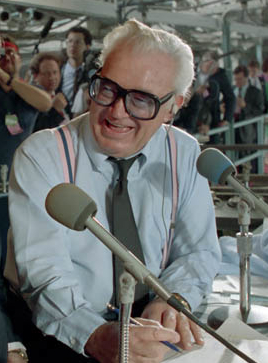
Well, I don’t normally like to give myself credit, but I think my letter to Harry, (A Letter to Harry Caray), may have lit a fire with my favorite friends on the Northside.

It’s turned into a big weekend for the guys, along with big news.

It may be that they’re facing the Orioles pitching staff, but out of nowhere our guys have turned into the bomb squad.  They are launching balls farther and more often than the pros at your area driving range, and it’s becoming viral across the lineup and the bench.

Bryant, Rizzo, Russell, Baez, even Heyward is putting the ball deep into the field, everywhere, and anywhere.  Baltimore fans must be embarassed, because even though they are six under, their team hasn’t played this weak to power all season.

Later today, Jose Quintana makes his pitching debut with the Cubs.  You may recall he was previously a 3rd, and then 2nd arm on the White Sox rotation, but he’s been having a tough season because the organization has hit the reset button with move of Chris Sale this off-season.  With little run support, Quintana has managed a 4-8 record.

He’s going to sit behind Arrieta, Lester, and Lackey, on an already impressive rotation.  And if he gets hot, like the lineup has become, the NL and AL is going to have a miserable summer ahead.

Rizzo, who’s been batting in the .240’s and worse all summer, has brought himself back up to .258.  That may not seem big, but as you work the numbers, that means his hitting successfully one to two more times a week, on average.  This is how you build momentum when hitting.  If he can keep that up, he’s going to wind up back in .290’s, and judging from the recent drives, he’ll surpass 30 by September call-up week.

I’ve told people previously that in order to be a Cubs fan, you must have faith.  It has to be strong.  You can’t be the kind of person that loses all hope.  Baltimore is getting a taste.

Things are looking up!

Friday Night Opinion: When City Councils Run Amok – It Costs Tax Payers

Earlier in the week a small town in North Georgia called Varnell made headlines throughout various communities in the country.  The reason so many newspapers and blogs wrote about this town of just under 1,800 are for two reasons.  One, their city leadership did something unprecedented, and to here the recollection of the vent, a major decision in less than 30 minutes.  The second reason this made waves in news circle I’ll discuss at the end.

But first, let’s recap what happened.  And fair warning, I’m not going to do it like the news papers, I’m going to do it using the established facts, to paint as a complete story as can be told at this time.  Keep in mind, the news papers have an agenda, and this is also an on-going, current event.  So, there’s the expectation that as time moves forward, more details will emerge, so there’s the chance that those details may collide with what I know of this situation.

To start, the Varnell Police Department is responsible for a small community, when considering land mass, physically, it is officially reported in the US Census to be 2.5 square miles.

However, their town doesn’t sit in a square.  It’s a zig-zag pattern, that most US cities don’t contend with.  A layman’s query of the town’s shape using Google Maps tells you this is a town with a challenging spatial pattern for any law enforcement agency to patrol.

As it stands, the police department in this community is responsible for 22.5 miles of State Highways and roads that come in and out of their community, all heading to larger towns.

Chattanooga is northwest of them, and surely this means Varnell receives some “run-off” traffic, that being traffic trying to use the small community as an alternative to road stoppages, accidents, and so on.

But more importantly, it’s a town that has a very bizarre shape, because for some reason, which we’ll get to explore a little, their town limits have been scattered, literally all over the major roads in the area.  While the town has a core area which one would expect, everything else is a jigsaw puzzle of city limits, and unincorporated county.  It looks very weird.

In looking at their outline, I counted no less than 37 spaces of unincorporated area, big and small, that the city limits appear to surround…..what is this madness?  Well, I had difficulty finding solid sources, but this appears to be something similar to what happens in Oklahoma, where actual land owners have to petition for incorporation into the city limits, even if they are surrounded.  And I love Oklahoma, but it’s one law I don’t agree with.  However, what I saw with the Varnell map, I’ve not ever seen play out quite as extreme in Oklahoma.  The layout of Varnell is in need of serious fixing, and it starts with an overhaul of State law concerning annexation and incorporation of land.

Now that we’ve laid that part of this situation out, let’s talk about the one factual issue that the city laid out that led to this rapid-pace decision.  Civil liability.

City governments, County governments, and State Governments are typically some of the biggest insurance customers out there.  The federal government isn’t, because they put our collective taxes into everything they do, and if they get sued, they just cut a check on the promissory of those taxes, whether they have it actually or not, because in the end, we just keep paying taxes, that fund those issues for them.  Again, I digress.  At any rate, the governments closer to the ground don’t have that luxury.  They have to balance their checkbooks in fiscal cycles, on an annual basis, the exception being that some States have adopted a system whereby an unexpected negative may be eventually covered over the course of the following year or two.  We won’t discuss those instances, their not germane here.

City of Varnell has an annual budget, like most cities, and because they are small, everything that hits them stings.  It’s not totally their fault.  They don’t have a crystal ball, they predict everything that’s going to happen.  Life is tough, you got to have a helmet.  So, like the responsible city that they are, they purchase insurance bonds.  But those bonds have steep payments they make out of their city budget, and those bonds go up based on their level of activity, meaning, claims.

The Varnell Police Department, allegedly has had two liability claims, paid out by council vote, because most likely, their city attorney said it would be cheaper.  Government, unlike us, can’t fight for principle anymore, because it’s too costly, that’s what everyone tells them.  The two claims were the result of traffic collisions.  Those details have been lightly reported, and the information is conflicting.  And the City of Varnell’s own website presents no information concerning those claims, even though they have been awarded as a “Certified City of Ethics,” which one of the tenets is to be an environment of honesty and openness.

I did manage to find a council agenda dated April 19, 2016, at a cached site that has one sentence in that reads:  “The city’s liability insurance premium has increased for this year due to processing of 4 claims Within the 4 years.”

So if we’re going to go off the statements of the city council members, who were the other two claims against?  And are those departments facing disbandment because of the claims faced by the city?  As of now, no one is commenting on that.

There is a rather charismatic character in all of this, Sheldon Fowler.  Recently, Fowler had to resign from the city council.  He was a ‘mover and shaker’ type, so I’ve been told, and he apparently had plans to run for a bigger office.  That is until his personal behavior caught up to him.  On June 27, 2017, Fowler’s wife called 911 complaining of her own husband, being drunk and loud.  Side note, it sounds like a wonderful home they have.

When Chief Lyle Grant and Lieutenant Greg Fowler (no relation) responded, Sheldon decided that poking both officers in the chest, yelling (about his position and standing I’m sure) was a good idea.  Both officers documented the situation, and applied for an arrest warrant, rather than taking Sheldon into custody on the scene.

Now, you might be asking yourself, why did these two lawmen decide to take this route, rather than one we’ve seen on television over and over again:  Drunk and disorderly, loud, rude, and placing hands where they don’t belong, usually ends in handcuffs, right?  Yes, but these two officers knew what was coming.  And the process of getting an arrest warrant means that a County Prosecutor or State’s Attorney has to evaluate the evidence, qualify the facts in an affidavit of probable cause, and then have the arresting officers swear to the statement.

These two officers were smart.  Very smart.  Extremely smart.  They covered themselves.  Because the arrest warrant was granted, and nine days later, they arrested him on the charges.  For Sheldon, that was the nail in the coffin, and the following meeting, he had to resign, after the city council was forced to motion for it.  And here’s why I say they were forced:  It is clear by the timeline of events, that while the police department must not be highly regarded by the city council prior to this incident, that this incident caused a major headache for the other city council members.

Additionally, the 911 call that Sheldon’s wife made was more disturbing than a mere drunk spouse being belligerent.  A direct quote from the audio was “My husband is drunk, half naked, and won’t leave my two daughters alone.”  His wife also stated that she has to lock her two daughters in their bedrooms, because at night Sheldon wanders……disgusting!

I’m going to opine this:  they themselves saw the writing on the wall.  If these two very smart lawmen could do this to “Good Ol’ Boy” Sheldon, what were they going to do to them?  Considering the statement made in that old city council agenda I found, the rift between police and city council has been simmering for awhile, if we are to believe the city council about their issues with claims, then it would seem they mitigated that for quite some time.  To all of sudden bring that up as their primary concern now doesn’t make sense.

It even makes less sense when you look at the January, February, and March 2017 meeting minutes where the same council members were adjusting their city budget for payments necessary to make that police department State Certified!

That’s right, this same city council was actually taking proactive steps to remedy the claims issue.  For those that don’t know, while insurance bonds have markers for claims, like the meeting minutes claim (4 claims in 4 years), there is also a way to mitigate increases.

Think of it this way, you get auto insurance, there are certain things you can do to reduce your costs:  Have two cars for one person, both insured on the same plan; don’t have tickets, accidents (claims), have an anti-theft system installed, and so on.  Well, the Varnell Police Department was actively trying to achieve State Certification in Georgia, which would be a symbol of excellence, acknowledge by among others, insurance companies, which would mean VPD could potentially keep their bond amounts down for the city.

But, Chief Grant can’t go out and do all that on his own, he needs the city to accept the payments needed for the evaluations, for the additional infrastructure that may be needed, etc.

So if there is such an urgent need to disband the police department, why is the city council writing checks for State Certification?  Isn’t that irresponsible use of municipal funds?  Someone may want to look into that, because that’s surely waste and abuse of funds, and it certainly borders on fraud, in the sense of lying to citizens.

Getting back to Sheldon’s arrest.  After he was arrested, forced to resign his council seat, and overall publicly outed as a drunk, abusive spouse, and likely a predatory sex offender waiting to act, Chief Grant was suspended, and the Georgia Bureau of Investigation was contacted to investigate the matter of how Chief Grant went about his arrest.

GBI never got that message apparently, because first, the city never actually requested it.  Second, GBI stated they were not aware of anything criminal that happened on the part of Chief Grant during the incident, and the only thing GBI stated was that if Chief Grant acted “inappropriately,” that would be between him and his employer (City of Varnell).  And that’s the issue at hand it seems for this clown of a city council.  They just don’t like the fact that Chief Grant made Sheldon Fowler responsible for his reprehensible behavior.  This city council isn’t interested in justice, they’re interested in saving their own skin, and keeping their ‘Good Ol’ Boy’ system intact.  It’s foolish to allow city councils like this to carry on.  A word of advice for the citizens in Varnell: recall these people immediately, because letting them stick around means you empower their foolish behavior, and that means it only gets worse from here.

The council members claim that their city budget is $954,000, and that the Police Department costs over $300,000 to operate.  Those numbers could very well be accurate.  However, what they also point to is a line item in their budget, that they have to pay every year, regardless of whether they have a police force or not.  And that’s $50,000 a year to the County Sheriff.

Here’s a quick breakdown:  Every incorporated city has to pay a fee for “service’ from the County Sheriff that is assigned to their county.  The fee can vary from community to community, and it comes directly out of property taxes, usually.  So it’s really a “paper” item on the city budget.  The city budget is a lengthy report, and it shows literally every dollar raised through taxes and services.  Property taxes is one of those items raised.  However, if you look at the breakdowns, a chunk of that money doesn’t stay with the city, it goes to the county offices.  Things like the Assessor, Sheriff, Public Works, etc.  Why?  Because your city is within that county, and even if you don’t realize it, there are things the county provides your city, directly or indirectly, that do benefit your city.

In the case of the money going to the Sheriff, that $50,000 is for basic 911 emergency response within the city, if needed.  The phrase “if needed” is important.  Because if your city department is in the midst of a call, and the officers on duty are tied up, your citizens can continue to call 911, and a deputy can be dispatched to cover that call.  If you do away with that payment, that service goes away.  There are some communities that may not necessarily need that basic service, but that is also only one part of that fee.  That fee also goes towards covering things like evictions, on the front end.  See, if you’re a landlord, you pay fees to get a tenant evicted, but most of those fees go to the courts for their time, labor, and paperwork — that they had you fill out.

Meanwhile, the Sheriff is required to exercise the eviction, but gets next to nothing from the actual fees charged the landlord.  So instead, the Sheriff is given an upfront payment within that annual fee charged the city, typically based on the level of activity derived from civil functions the Sheriff services, mainly evictions, but also some other smaller tasks, like serving papers, etc.

To be quite honest, I’d be surprised if these city council members in Varnell knew that, because they seem to think that by relying on that $50,000, they’ll get the same level of service that their city police department provides.

Well here’s the facts, that money only covers 911 calls, like the one made to Sheldon Fowler’s residence.  What it doesn’t cover is non-emergency calls made by residents, or 911 calls determined to be non-emergency (like a burglary discovered after the fact – people are scared out of their wits, and expect service on such calls)  The Sheriff has stated he doesn’t foresee any problems with service…..SURE he doesn’t!  Because the first time the council demands his deputies start to respond to non-emergency calls, he’s going to have the meter running!

In order to get full law enforcement service, Varnell will have to contract with the Sheriff’s Office, and their council has already advised City Manager Mike Brown to look into contracting.  But then the council members keep citing the $50,000 number as the only cost.

How can you “look” into contracting, if you’re already sure of the pricing?  The statements made to direct questions by this entire group do not line up, and it speaks to the very unethical behavior occurring.  It speaks to them not being truthful about what is really motivating them, and what their actual intent is.

And back to that savings figure of $250,000.  That would never be realized.  For one, they have to pay out severances to the officers involved, and that can exceed 12 months of unemployment.  They obviously are not aware of public employee law, but when you have an established government office, you staff it, you are making career appointments.  Baring poor behavior or performance on the part of the employee, they can expect to be there for a career.  Now, it would be unrealistic if a city had been talking about disbanding their police department for five years prior to an officer’s arrival, that once it happened, that officer would be entitled to 25 years of severance.  But, they would likely have to be compensated up to an additional five years, and more likely somewhere between two to three.  Second, the city would ultimately have to chip in additional funds to the Sheriff’s Office the minute a major investigation hit in city limits, like a narcotics bust, or a stolen property ring, and so on.  That wouldn’t be covered by $50,000 dollars.  And investigations can get expensive, especially when there’s evidence to collect and store.

The council has said they intend to pass the tax savings to citizens, but also cite park improvements, and many other civic projects.  Well, it’s going to be one or the other, and if it’s a savings, it’s not going to be much.  If we were able to actually take that money every year, dollar for dollar (which will never happen), and put it back in the pockets of the tax payers in Varnell, that’s approximately 142 per person.  If we broke that down over households, it’s more like 215 dollars on the actual property tax bills within the city limits.  But that’s a year.  It’s less than 18 dollars a month.  So what the city council has actually proved, is that for 24/7 coverage, with full law enforcement service afford the police force in Varnell,  is that the city is going to be cheaper than anything the Sheriff’s Office can produce.  Varnell currently keeps two officers on duty around the clock.  The Sheriff’s Office says they have one deputy in the area at all times, and intends to patrol the city with just that one deputy.  Even if the deputies work four 12 hour shifts, that is half coverage.  We could argue that $100,000 to the Sheriff’s Office would produce 24/7 coverage…but again, that’s 911  call service only.  The level of service does not match what Varnell currently receives on it’s own, and an analysis of the numbers would bear out that the Sheriff’s Office will ultimately exceed VPD’s budget by a factor of 1.5, if we were to mirror the level of service.

There is one article that suggests the city council was upset at the length of time between the incident, and the arrest.  As stated, it took nine days for VPD to receive warrants for Sheldon Fowler’s arrest.  That could be the cost of doing business, that could be that Chief Grant wanted to take time, before taking action, because he wanted the charges to stick, if they were going to.  And it appears if he made this move intentionally or not, in terms of criminal justice, he picked the best path.  Chief Grant has had a full career in law enforcement, and I have no doubt he’s seen council members in the past do things off the municipal clock that were less than stellar.  It may be that those past incidents influenced how he handled this one, because the charges are solid, and the case is going to be hard for Fowler to fight.  His best chance is seeking a plea deal.  He’s civic career is done irregardless.   What is clear is that Chief Fowler, may not be the city council lackey that they thought he was.  But the truth is, that isn’t his job.  City councils can tell Chiefs they are fired, but they can’t tell them how to do the job.  Nor should they.  All they’ve managed to do is stick their proverbial keisters on front street for everyone to see.  And that’s nasty.

I talked about the second reason this made headlines, and here’s what that reason is: the current anti-government sentiment being pushed in the media.  There’s no argument that our various media agencies have focused on law enforcement’s use of force as a way to deride the concept of government.  Any time they hear of a use of force incident leading to a death, they are there uniformly, unless that death is of an officer.  However, no media organization can keep that kind of narrative up without adding other stories here and there, to give the proposed theme context.  And so, a small town in North Georgia becomes a lightning rod, even though the story is inaccurately covered, and relies heavily on city council members who are clearly quoted in less than truthful statements.  As much as I enjoy news stories, and as much as I appreciate journalists, this on-going “war” they want to wage on traditional government roles is unquestionably the dumbest strategy to sell advertising that they have ever collectively been involved in.  This is a huge gamble, and whether they are cognizant of it or not, they are staking their entire claim on such a narrative.  And the longer it goes on, without an actual pay off, as in they finally get the truth out there on one of these stories, the sooner their readerships are going to dwindle, their advertising dollars are going to shrink, and the more of them are going to die off.  Narrative reporting has been one of the worst experiments ever conducted by journalism, and it needs to end.  The fact that I can search a city website, and connect fact to false statements made by the sources in these stories quicker than NBC says a whole lot about what is happening with modern day journalism.

Back to Varnell, we look at these situations and say “well that’s small town politics,” but that’s an unacceptable answer.  Again, recalls should be the next move by citizens.  No debate, no “well he/she is my friend otherwise” none of that.  Just recall them, and set the tone that citizens want true, unabashed representation.  Sorry your friend is a degenerate scumbag who wants to touch children, but that’s not our problem as citizens, that’s your own personal problem to contemplate.  If it’s too much for you, resign.  Otherwise, we’re going to make you leave.

Small towns are painted this way, because this isn’t the first time we’ve seen this kind of knee-jerk, nonsensical, decision made by people who are either unqualified, or criminal in their thinking, and the longer these sorts of displays are allowed to continue, the longer this stigma is attached to small towns, that could attract outsiders by hundreds, if not for the appearance of toxic scenes such as this.  Small towns can uncoil much of the perception around them, if they treated their small towns the same they regard them, worth protecting.

Let’s hope the citizens in Varnell step up and do something memorable.

A Letter to Harry Caray

Dear Harry,
It’s been over 19 years since you passed away. I miss you, like every other Cub fan. You should have seen them last year. They won Harry, they really won. It was incredible to see. It was as close to a crosstown classic as I think we’ll ever see, they faced the Cleveland Indians. The Indians as you’re well aware were as Series-starved as the Cubs, and both teams rose to the occasion, going to game seven. I know what you’re thinking. Did the Cubs have some struggles winning that Game Seven? Yes, they did. Did they seem to lose it at one point? Yes, they did. But the main thing is that they hung in the game, finally took advantage of the opportunities that tended to allude us for 108 years, and pulled it off!
It was such a great moment Harry. I can safely speak for the Cubs’ Faithful when I say we wonder how you would have called it. The breaking balls being fouled off, in desperation to keep the At-Bat alive. The way the balls hung in the air on-line drives and pop-ups, in that late October air. How both towns on the Great Lakes seemed to be inviting chaos into games, every time mist was seen in the air. The sprinting catches, the stolen bases, the towering home runs – always timed well I might add.
It was so great to watch. It wasn’t as great without you calling it though. That was a letdown. I tried imagining in my mind, listening to you call every game. It was tough to do. The world is a lot different in 2017 than it was in the late 90’s. There’s much more distraction now than at any other time in our existence, and trying to envision a Harry-called World Series was tough for me. I could hear you shouting, “Holy Cow!” and many of your trademark phrases, but the whole game was too much to construct.
A lot has changed at Wrigleyville too. Someone else may have written to you that the Ricketts Family purchased the Cubs, and they have a vision of modernizing the club and its footprint, to be more in line with other MLB clubs. They’ve been buying the rooftops across the streets of Waveland and Sheffield. They seem poised to take over all the businesses for a block around the stadium, and turn Wrigleyville into a small ‘faux’ town. It’s crazy to think about. On one hand, it’s the way of business. On the other, it’s like being in the heart of Cubs nation is going to lose some of its identity and character.
Maybe it’s the pessimist in me, but I think we lost a lot of that identity when you left. You spoke for us Harry. That was what made the games so good. You weren’t bashful to say exactly what was going on, in the game, with the team, even with the organization. That was helpful. That was therapeutic.
Now we’re in the midst of a sub-.500 season. We’ve seen these before, we’ll see them again. We’re sitting in second place right now Harry. We’re four and half back of Milwaukee. Can you imagine, Milwaukee?? Yes, a lot has changed since you were here Harry.
On sports radio around the country there’s talk of disappointment with Cubs fans from the rest of the sports fan community. Apparently, we’re not as supportive in the World Series “hang over” as other fan bases have been for their clubs. We’re not staying the length of the games at Wrigley (which I think is made up), and according to the “experts” when they talk with us, we’re antsy. We want to repeat as World Series champions, and because we’re less than optimistic, that means we’ve lost our “Cubs edge” and are now imploding.
So much for experts. How soon they forget that we waited 108 years for this. They’re comparing us to fan bases that won a Series, and then had to wait 20. Or teams that won that haven’t been around as long as the DH rule arguments. They’re making us out to be impatient, sour, and most of all, ungrateful.
I haven’t lost my faith Harry, and the Cubs fan I talk to haven’t either. Sure, there’s the usual mistrust of baseball happenings that all Cub fans have had for as long as I can remember. One-hundred and eight years of waiting teaches you a lot of patience, but it also causes you to dial into your cause tightly. I’d argue any day that Cubs fans are more knowledgeable about the pace and chance of any given game compared to other fans. Sure, other fans may know about types of defensive shifts, left vs. right match ups, and all those technical aspects. But I don’t believe other baseball fans have had to sit idly by as a sure thing melts for no other reason than just the “Baseball Gods” interpretation of the laws of averages.
But away from all that, I think without you Harry, the baseball media doesn’t understand us, or how we think, or how we see baseball, overall or day-to-day. Harry, they’re lost on us without you. And the World Series win polarized it.
I wish you were here to quiet the supposed storm. I wish that voice of reason, that seemed too blunt for other teams, was here to explain us to everyone else. We have no less love for our team today than we ever have. You know that, but somehow all these other media types don’t get it.
I wish you’d been here for the parade Harry. You would have been ecstatic. You would have been a king in his den. You would have been as excited, and curious, about the future of the Cubs.
This turned out a lot longer than I wanted it to be. I have a lot more to say, but I know you’re busy. I hear Lou is starting, and Babe is swinging, but up there they’ve got nothing on Ernie, Ron, and Hack. But the one thing that is for sure, no one up there sings like you.
I miss you Harry. I wish you were still here.

Getting Back in the Saddle

It’s been awhile since I’ve written on my own site, which for me is even more of a shame than the dismal sight of it.

My ghost writing work, along with my day job interfere with my old routine in a way that by the time I catch my breath, it’s time for the next job, or task, or assignment, and I never quite get around to writing what I want.

Just before typing this, I ended up deleting a post that was in draft discussing baseball…..in 2016.

Needless to say, life has swallowed me up, and though I’m accomplishing a lot, my own writing is lagging.

I hope by posting this, I’ll get back in tune with what it is I am doing here, which is connecting you with my published work, and also giving myself a steam valve, which I am in desperate need of these days.

On a side note, my short story in Walk with Warriors is moving along.  Slowly, as the publishing process always is, but moving just the same.

All in all, stay tuned.

Travel Review: The Bahamas in Christmas

So, while most of you were enjoying a snowy Christmas, I bucked the trend and went to 87 degrees and balmy.

You guessed it, The Bahamas.  And before you judge, which you are, it was as awesome as you think, even when you factor in no snow for Christmas.

I went to a Breezes resort, and it was ok to average.  It’s definitely catering to singles.  Which was weird, because there were several “singles” that were with their mothers, trying to pick up other singles.  It’s a brave, weird world we live in.

The weather was absolutely terrific, and exactly what I needed at that point in the year!  And I have to tell you, I’m certain I’ll be doing the exact same thing for Christmas, every time I can afford it!  I’ve had enough snow, ice, cold, and wind, to last my lifetime.  I’d much rather be on the beach.

And the beaches in The Bahamas are where it’s at!  The picture above comes straight from my old phone, so apologies for the quality.  But, what it conveys is how perfect it is during Christmas in the Caribbean.  Peaceful blue water, white sand, and miles of beach to walk and explore.

There are some condemned resorts in the section of Nassau that we were in, that made the place seem like a shanty town.  A custom by the foreign construction workers is to camp out in the building their renovating, so the hurricane-swept vacant towers of a never-opened resort, had towels, clothes, and other odds and ends hanging in the air, with random cooking fire flames sprouting up every now and again.

Buffet breakfasts in the Caribbean resorts are the best meal of the day, they have flanks of smoked salmon, slices of well-aged gouda, and omelettes on demand.  Of course, you’ll eat hearty, and it can catch up to you, in the belly, or while swimming, so even though it’s all-inclusive, watch how much you’re filling up.  People indulge, no matter who they are, and there’s nothing worse than someone having stomach cramps by 10:00 AM in the hot tub, lest it be you.

It doesn’t matter who you are, bring sunscreen.  I can’t stress it enough.  Some people with darker complexions at the resort burned, thinking they were UV ray proof.  Surprise, you’re not!  There’s no shame in using sunscreen anyway.

Also, it turns out there’s a big opening in the real estate market in The Bahamas, and they’re wide open to US investment.  Many of the properties I toured were far more reasonably priced than you can imagine.  What I can say is go check it out for yourself, you’d be surprised how affordable it is, if that’s your interest, and how stable the houses there are, even in the face of a hurricane.

In brief, the next time you’re up for Christmas vacation, consider The Bahamas!

First Draft Submitted!

Matthew’s first draft for the Walk with Warriors – Journey of Heroes has been submitted today, and now the publication process begins!

Matthew does expect editing to produce a second draft, but believes that editing on the chapter will be limited to that.

“I think the story is what will matter most.  Much of the working parts are there.  It is a single chapter, so no one is anticipating a major overhaul.  But I’m sure I need to have some sentences sliced.  Anytime you take on a project such as this, it involves a lot of raw emotion, that may be settled, but hasn’t been fully processed, and the writing brings those less than smooth corners out.”  Matthew responded, when asked about his expectations.

Each chapter of the title, Walk with Warriors, are written by a different veteran to convey the experience of serving in the military, and what the experience may bring.

“My story is about war back home, in a sense.  At least, one of the many wars we are constantly up against, not just as military members, but also civilians.  And I think that with this particular story, the truths revealed in it are something that people who have not served can identify with immediately, and shows that life in the military is not at all an escape from the reality we live in outside of the military culture.”  Matthew said.

The title is set to be completed for publication sometime in early 2017, and will be available in e-book formats immediately.

“The great thing for me with this project is getting to see first hand how the e-book publication method works.  I’ve heard lots of stories about it, now I get to see what it’s really like, from a business and a writing perspective.  The fact is, it is becoming the traditional format.”  Matthew said when asked about the non-traditional formatting.

More details are to follow concerning Walk with Warriors, be sure to stay in touch!